Showing posts with label Julie. Show all posts

Saturday, August 31, 2019


TALKING ABOUT CHILD EDUCATION WITH COMMUNITIES

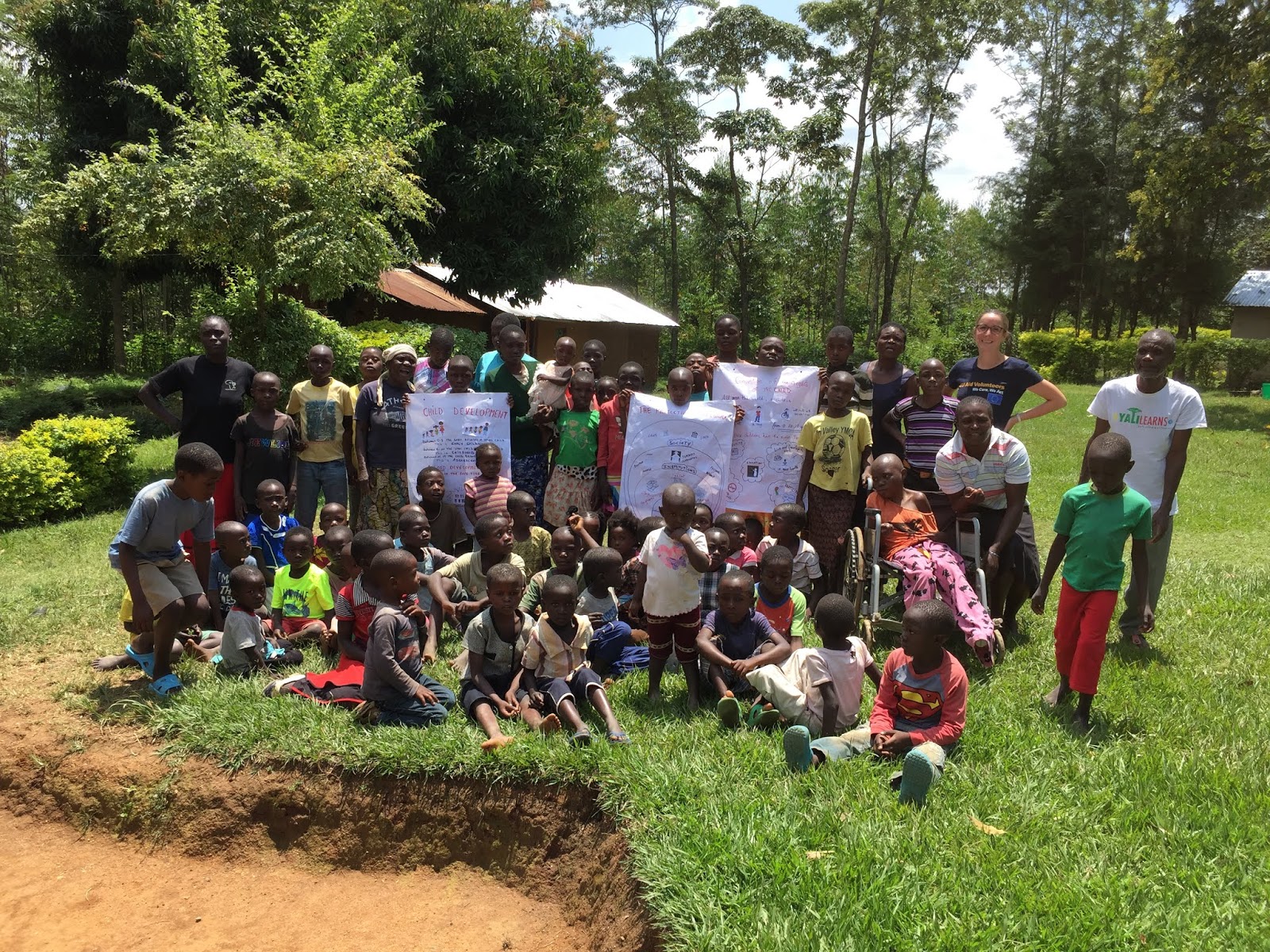
During this month of August in Shianda, the schools are closed for the holidays; I seize the opportunity to spend time with the communities to speak about child education and issues.

How to discuss the education of children and the problems encountered with these communities?
I decided to rely on 3 posters, as a basis for my explanations and exchanges.

The first is about the child protection network.  

Parents are not the only actors in the child’s development, they are surrounded by the extended family, but also by the community, institutions and society in general.
Parents are obviously responsible for their child and must be vigilant to ensure that the child's environment is safe and caring.
This poster allowed for a lot of discussion about the potential risks in the community and the institutions (bad associations, road risks, mistreatment at school ...). We thought about ways to protect children and avoid these potential risks.


The second poster is based on the Convention on the Rights of the Child with its main beneficiaries and main articles.
The fundamental rights of children are:
•The right to an identity. Now in Shianda, this is no longer a problem. According to communities, it is easy to obtain a birth certificate necessary for all future steps concerning the child.
•The right to live and good develop. This consists of giving the child the food, water and necessary care. This right makes members of groups wonder, they are often well aware of not having enough money to feed their child 3 times a day. I accompanied my explanations of support for the fact that they do their best for their child and that even if sometimes life does not allow to be perfect, the important thing is to provide what we can and of course to regularly monitor the health of his child, to react if necessary.
•The right to education. Bringing their child to school is very important for members of these communities. They are aware of the challenge of education for the future. We also exchange the fact that the school, although essential, is not the only source of education and for that we referred to the poster number 1.
•The right to be protected and loved. To define this right, we have of course mentioned the risks identified in the poster number one and the responsibility of parents or guardians to provide means of protection against these risks.
•The right to participate. This right brought a lot of discussion and questions from the participants. We performed role plays to demonstrate that communication and explanations can reassure children. It had to be explained that involving the child does not mean giving up everything to him or waiting for his consent, the parent remains the decision maker. But often, the child understands his environment better when an adult take time to explain to him and this can reduce frustrations or misunderstandings. Lack of time is an excuse not to talk with the child, but I try to explain to them that starting by forcing a few minutes a day will be very beneficial in intra-family relationships.


The third poster explains the development of the child and the different areas of simultaneous development: physically, intellectually, morally, socially and emotionally.
This third step in the exchanges allows a return on everything that has been previously discussed and to identify the various problems faced by parents or guardians.


The main concern that has been identified in each group is the relationship with adolescents. It was very interesting to discuss this period of childhood that is problematic everywhere in the world! We had to talk about our own memories of our teenage times and what we had to blame our parents for, or what we missed. I am surprised by the participation to these exchanges because the members talk sincerely and bring elements of understanding very useful to the group and also some solutions to test at home, as to find the time to exchange with his child as a first step to creating a relationship of trust. Games and mimes around emotions have been very useful to develop this topic.


If time allowed, we could also, in some groups, talk from case studies, related to the problems encountered here and so think together about the risks and the possible solutions to avoid or overcome them.

These times of exchange are always very studious but also very warm and punctuated by a shared meal, songs and prayers.


And then I must not forget that, who says "I will come to speak with you about education", means for the chairladies to invite the children to participate in the sessions. 


It was always nice to take the time to play with the children while waiting for the arrival of all participants and to see them interested by listening to the exchanges between adults. This, in my opinion, indirectly allowed a first new contact between children and adults, around the needs of some and the attentions of others.


Thank you again for your warm welcome, your constant attention and your sharing of experiences.
I will try to plan new sessions with these same groups before my departure to discuss possible attempts to change and problems encountered.

Friday, August 2, 2019

JOHN AND ZAMIRA, MY NEIGHBORS IN SHIANDA


As part of the partnership between Estonian schools and schools around the world, Mondo shares children's life moments.
You can find these exchanges on the website "foodforthoughtmondo.wordpress.com"

I was asked to participate in these exchanges by making a video "A day in my life" with a child from Shianda, Kenya.

Sophia
Unaware of how to "find a child to film", I asked Sophia, who is a teacher in charge of the links between Mondo, some schools of Shianda and WEFOCO, the organization that welcomes me .

Sophia is a teacher at Mukambi Primary School, ECD class. I must say that this school is just a few meters from where I live, it seemed easier for me to choose children from this school to be able to follow all day without many transport to add !!! 


Which children to choose? A boy ? A girl ? I could not choose.

It is true that the concept of gender is very present here in Shianda with activities reserved for girls and others for boys. Sophia understood it ! 
So she found me the ideal plan: Spend the day with John and Zamira, two cousins who live together with their grandmother, right next to my home!   IT WILL BE PERFECT !

After a first meeting of the family with Sophia, the appointment is made, I will be at their home Friday morning at 6:15 to start the day with them!


John is an 11-year-old boy in class 5, Zamira is an 8-year-old girl in class 2 and their grandmother Genoveva is 53 years old. They all live in a small earthen house, consisting of 3 rooms and a separate kitchen. The fathers of the children are the sons of Genoveva. Without putting too much time to ask questions, I understood that Genoveva took care of his grandchildren because his sons have new relationships in which previous children are not admitted. She says she is very happy to be able to take care of them because they keep her company and are very kind children. She is very proud of them and talks about them with a lot of love.


MY DAY WITH JOHN AND ZAMIRA

I find them at 6:15 at home, they are awake recently and already getting dressed for school. The preparation is very fast, they wash in basins in front of the house and organize breakfast. This morning they have bread with butter and Kenyan tea, very sweet milk tea. Genoveva will tell me that she often gives them some money to buy a mandazi (donut) on the way to school because they do not always have enough for breakfast.

And then HOP, go! The marathon day begins !!!!

7am at school, John starts a lesson on economics in Kenya, Zamira patiently waiting in class for other students.

7:30 am :  the ceremony at the church just next to the school. Nearly 900 students religiously follow the sermon of the preacher and sing with joy.

8h : the ceremony around the flag of Kenya with the singing of the national anthem.
Then advices in hygiene and seriousness in learning are reminded to all students in the yard.


Until 12:40, the lessons are linked in the classes and then it is the break for lunch.


All children go home for lunch. John and Zamira will finish, with appetite, the bread and butter of the morning as well as leftover potatoes from the day before.
Genoveva is absent, she is at work. She is a volunteer in a clinic for people with AIDS and people coming for testing.


13:30, the children are back to school. Today is Friday so the day of the cleaning of classes by students. All bring a small can of water to participate in the cleaning.
Zamira, in class 2, did not class in the afternoon but spent a lot of time in joy and laughter with her classmates to clean up the class.

John has some lessons and the cleaning is done later in the afternoon.


As John has class, I spend the afternoon with Zamira, which carries out many activities for the house: to fetch water at the source, clean the rooms of the house, do the dishes of the day before and the day, bring the maize to the person who will make flour for the evening meal ... It is only in the late afternoon that Zamira will take time with a friend to play hopscotch and to play the teacher.


On his return from school around 17h, John also starts to work on the garden ... he clears a bit of ground in front of the house and moves many wheelbarrows.


Genoveva returns from work around 18:30, at nightfall and begins to prepare the meal with Zamira around 19h. They settle on small stones in the kitchen, around the fire, and prepare the local dinner, ugali (made with corn flour and water), accompanied by sukuma (cooked kale).


The time of the diner’s preparation is favorable to the exchanges with Genoveva who admits having a lot of luck to have these two grandchildren with her. She explains that her situation is not easy because she earns very little money, but she is part of two women groups who support her as a grandmother taking care of her grandchildren. This exchange is without pity or complaint, but with great sincerity and respect.


At 8 pm I leave them before bedtime, the day has been busy!

I can only be admirative of all that children do here in a day ... when I think that at home, in France, children have a hard time keeping up with their class day and are not very active back to school at home !!!

Thank you John, Thank you Zamira, Thank you Genoveva for this wonderful day of discovery and sharing. I would like so much to thank you for all that you have made me realize today. Perhaps we will have the chance to share an excursion to Kisumu's Impala Park soon.

PS: my many videos have been transmitted to Mondo teams and I hope to quickly receive the small film to share it with them.

Monday, July 1, 2019

Habari, mimini Julie !


This is the first month in Shianda is already over! We had been warned that time flies at a crazy speed!
Students from Khabakaya Primary School


I am Julie Escoffier, I am French and I am Aid Volunteer of EU in Shianda, Kenya for 6 months.
My field of work is childhood, education and child protection as a whole.


WEFOCO and MONDO are partners of 8 schools in Shianda-Mumias area and the teachers will be my privileged interlocutors.


Class 2, mathematics, Mug'ang'a Primary School

The Kenyan school system is structured as follows:
- ECD classes for the little ones from 3 to 6 years old, with two levels of class (not obligatory)
-Primary school with 8 levels of classes, named Class 1 to Class 8
-Secondary school with 4 levels of classes, named from class 1 to class 4

Like us, children start primary school at 6 years old. The school year starts in January and is punctuated by three holiday periods: April, August and December.


To move from one class to another, students take exams at the end of the year, which are multiple choice questionnaires for the 6 subjects studied in class: Mathematics, Science (Physics, Chemistry and Biology), English and Swahili (official languages), Social Studies (History, Geography) and CRE (Christian Religious Education).


Example of the first two pages of questionnaire for class 6


At the end of the primary and secondary cycle, there are national examinations whose results define the possible continuation of schooling.

Although primary school is compulsory, it is not free, even for public schools. Families must buy school uniforms for children, all supplies and exams are also paid. The money problem prevents many children from going to school normally: some start later, or have to stop in school. The fact that the school generates a lot of expenses for the family also puts a lot of pressure on the children, it is not question of not succeeding otherwise it is the stop of the schooling.

MONDO, in these many actions, has created a "Brilliant Fund to support students and promote education" in Africa, and helps support the schooling of more than 150 children in the Shianda area, children from the most vulnerable families.
If you are interested, visit the Mondo website: https://mondo.org.ee/en/donate/brilliant-fund/


Accompanied by Sophia and Gladys, both coordinators between WEFOCO, MONDO and the partner schools, I was introduced to the principal teachers of these schools, then to the teachers themselves to discuss my background, my presence here for 6 months and on their expectations for a partnership / exchange of knowledge and practices. I could also participate in some observation time in classes.
My teacher training program obviously depends on my personal background and I wish to discuss with them the rights of the child, the right to education in particular and the teaching methods that facilitate the child's participation. to his own development.

The first hours of training for teachers will begin in early July.
I can not wait for it to start but I must say that I am a little stressed too ... So, I cross my fingers!