We have arrived a bit more than one month ago to Shianda village with Marine, who I was lucky to meet earlier on the EU Aid Volunteer trainings organized by ECHO and Mondo, which prepared us for our deployment. We met in Nairobi at the airport after a long journey from our home countries, which was followed by a short domestic flight to Kisumu and a 2-hour taxi drive which already allowed us to get some information about the area and people, thanks to our friendly driver. We were welcomed at the local market by Esther, the director of our hosting organization, WEFOCO (Western Focus Community Organisation), who showed us our accommodation and also invited us for dinner with her family, which was a really nice start for our stay in the village.

Not having running water and most of the time, electricity was a rather new experience for us but we were able to get used to the conditions quite quickly, also thanks to our landlord, Jacob, and his family, who are extremely supportive.
The office is 5 minutes away from our accommodation and since we are walking along the main road and the market is just across the street, it is always really busy with people who never missed the chance to great us, mzungus (‘white person’) at the beginning. It took some time to get used to being noticed by the locals and we also have to be cautious when asking the price of a product but otherwise we now seem to be more part of the everyday life of the community.
Although we were prepared for the limited variety of food within the village, we are fortunately big fans of the local dishes and already have chosen our favorite restaurants, where we usually order chapati with some local vegetables, and we also know where to buy our fresh and cheap local vegetables and fruits.
 |
| WEFOCO Office |
I have to admit that I expected a much more significant cultural shock but somehow Esther and her team made our adaptation smooth and anytime we enter the office, it really feels like we are part of their team. We are also learning some Swahili to make our adaptation easier since English is the official language of Kenya but Swahili is used as the most common way of communication in the village.
The organization, WEFOCO was founded in 2004 as a self-help group and later was registered as a community-based organization. They are working together with almost 30 women groups around the village and focusing on supporting orphans, vulnerable children in paying school fees and buying necessary school items in cooperation with MONDO, while also providing awareness-raising campaigns and support for families suffering because of HIV/AIDS.
 |
| Chairlady of Wichelu Group |
Since a large part of the local community in the village, especially the ones living in deeply rural areas lack access to education, information and job opportunities, the organization is also working on strengthening their skills and abilities in income-generating activities. Besides, since women are generally not treated equally in society, encouraging them to be more independent by participating in these activities is also an important aim of the organization.
 |
| Chairlady of Namulekuwa Women Group |
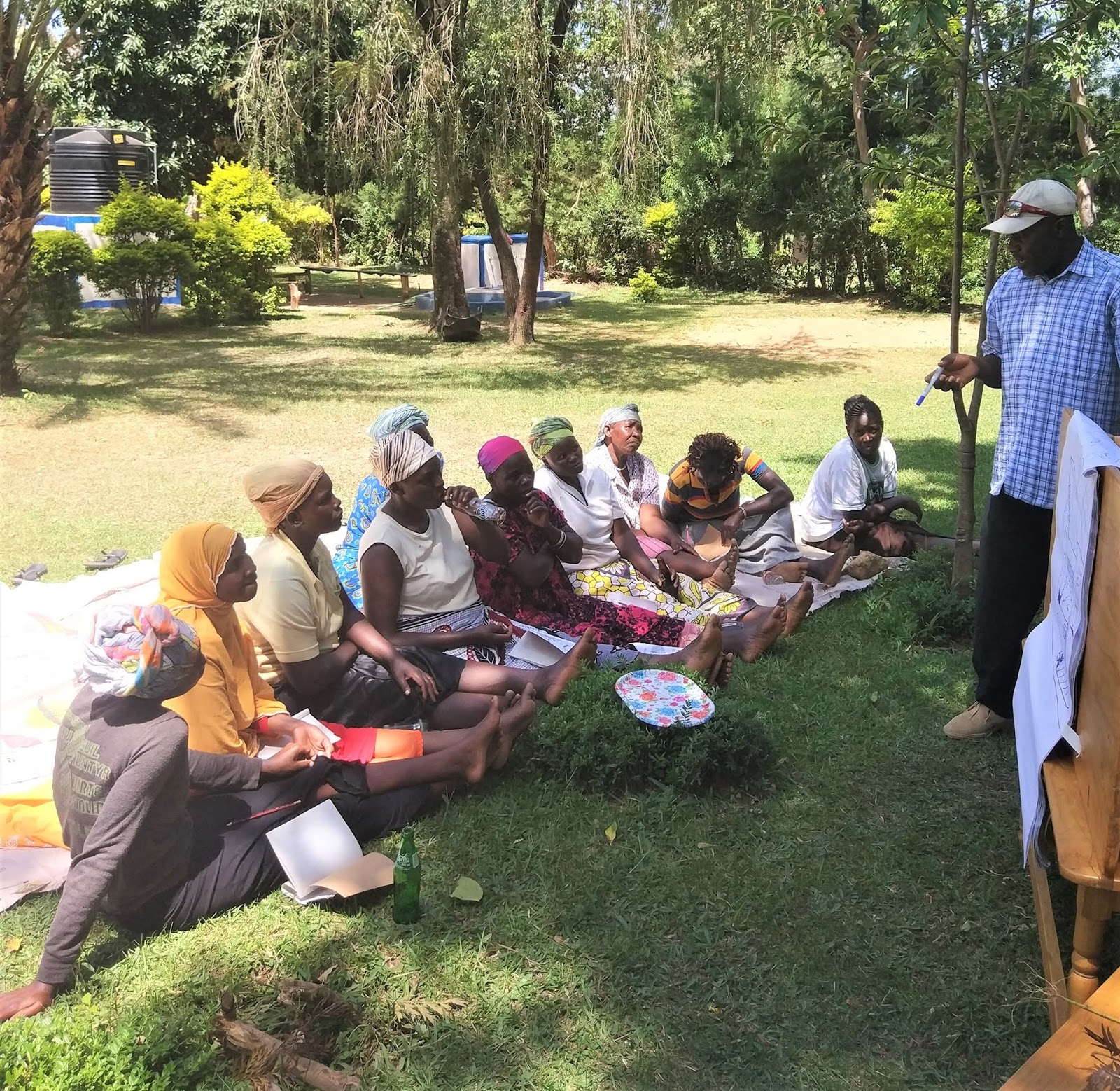
During the last weeks, my main task was to observe the ongoing activities to be able to define areas of improvement by visiting women groups and agricultural blocks around Shianda village. It was a unique experience since the meetings are very different from the ones I was used to in Europe. They usually start with the welcome dance of the group, followed by a prayer and some amazing dishes prepared by the ladies, usually some ugali and local vegetables. The guests are eating separately from the group who are waiting outside, which was surprising for me at the beginning. After the meal, the chairlady introduces the group, its vision, achievements, and challenges. Most of the groups were formed to find solutions together to these challenges and to be able to afford the education of the children in the community by starting income generating activities as well as by regularly contributing a fixed amount within the group through so-called merry-go-rounds and table banking.
Chenda Kala Group
 |
| Olungabase - Agricultural Block |
Although I have already had the chance to attend a meeting with the chairladies who are gathering every month, these visits are very valuable since they allow every member of the group to share their thoughts and concerns. After the meeting, I am usually showed around the field and introduced to the current activities, which mainly focus on poultry farming, producing crops and in some cases making handicraft products. Since they are dealing with these activities on a small scale, they wish to expand their projects to be able to have a more stable income. I was also lucky to have Esther by my side, who introduced me to the groups and also supported me as a translator since some of the ladies do not speak English. Although I felt that we could be much more time-efficient, the ceremonies seem to be an important and unmissable part of the meetings.

Besides focusing on agricultural projects, I am also responsible for monitoring the activities and strengthening the entrepreneurial skills of WEFOCO’s tailor team. MONDO provided sewing and a T-shirt printing machines to the office as well as trainings for members of the community. Since children in Kenya are only able to attend school in case they have the right uniform, it is a vital opportunity since the team is able to sew uniforms for students in the region. However, since the machines are available all year in the office, expanding their activities seems to be an untapped potential.
After getting to know the community and their projects, I feel lucky to have the chance to work together with them in achieving their goals during the next 5 months.