Monday, July 1, 2019

Habari, mimini Julie !


This is the first month in Shianda is already over! We had been warned that time flies at a crazy speed!
Students from Khabakaya Primary School


I am Julie Escoffier, I am French and I am Aid Volunteer of EU in Shianda, Kenya for 6 months.
My field of work is childhood, education and child protection as a whole.


WEFOCO and MONDO are partners of 8 schools in Shianda-Mumias area and the teachers will be my privileged interlocutors.


Class 2, mathematics, Mug'ang'a Primary School

The Kenyan school system is structured as follows:
- ECD classes for the little ones from 3 to 6 years old, with two levels of class (not obligatory)
-Primary school with 8 levels of classes, named Class 1 to Class 8
-Secondary school with 4 levels of classes, named from class 1 to class 4

Like us, children start primary school at 6 years old. The school year starts in January and is punctuated by three holiday periods: April, August and December.


To move from one class to another, students take exams at the end of the year, which are multiple choice questionnaires for the 6 subjects studied in class: Mathematics, Science (Physics, Chemistry and Biology), English and Swahili (official languages), Social Studies (History, Geography) and CRE (Christian Religious Education).


Example of the first two pages of questionnaire for class 6


At the end of the primary and secondary cycle, there are national examinations whose results define the possible continuation of schooling.

Although primary school is compulsory, it is not free, even for public schools. Families must buy school uniforms for children, all supplies and exams are also paid. The money problem prevents many children from going to school normally: some start later, or have to stop in school. The fact that the school generates a lot of expenses for the family also puts a lot of pressure on the children, it is not question of not succeeding otherwise it is the stop of the schooling.

MONDO, in these many actions, has created a "Brilliant Fund to support students and promote education" in Africa, and helps support the schooling of more than 150 children in the Shianda area, children from the most vulnerable families.
If you are interested, visit the Mondo website: https://mondo.org.ee/en/donate/brilliant-fund/


Accompanied by Sophia and Gladys, both coordinators between WEFOCO, MONDO and the partner schools, I was introduced to the principal teachers of these schools, then to the teachers themselves to discuss my background, my presence here for 6 months and on their expectations for a partnership / exchange of knowledge and practices. I could also participate in some observation time in classes.
My teacher training program obviously depends on my personal background and I wish to discuss with them the rights of the child, the right to education in particular and the teaching methods that facilitate the child's participation. to his own development.

The first hours of training for teachers will begin in early July.
I can not wait for it to start but I must say that I am a little stressed too ... So, I cross my fingers!

Wednesday, June 26, 2019

Esimene kuu Keenias, Shiandas

Olen Ester Väljaots, 02.05.1963.a.
Minu missioon Shiandas: EU vabatahtlik ettevõtluskonsultant maapiirkonna naiste kooperatiivide (~ 20) ja blokkide (4) jätkusuutlikkuse tagamiseks.
Missiooni kestus: 25.05.19-20.11.19
Jõudsime Shiandasse koos teise vabatahtliku Julie Escoffieriga 26.05 õhtul kui oli juba pime. Päeva pikkus on siin, ekvaatoril umbes 12 tundi. Päike tõuseb 6.39 ja loojub 18.48.
Praegu on vihmaperiood, see tähendab, et hommikud on selged ja õhtuti sajab.
Temperatuur päeval 24-26 kraadi, öösel 16 kraadi.
Pool tundi enne päikeseloojangut hakkavad malaariasääsed lendama ja seetõttu on vajalik võtta iga päev ennetuseks malaariarohtu. Ravimil on palju võimalikke kõrvalmõjusid, meie Juliaga tunnetame tavalisest suuremat väsimust, kuid see võib tuleneda ka kõrgest õhuniiskusest (85-90 % keskmislt) kombinatsioonis 26 kraadise õhutemperatuuri ning igapäevase äikeseelse ilmastikuga.
Malaaria on siin küllalti laialt levinud ja kohalikud on sageli haiged. Kohalik ravi on siin kiire ning tõhus ja meedikud kompetentsed tavapäraste haiguste ravimisel.
See pudelike oli üks esimesi ostusid. 150 ml vahend vee puhastamiseks. Üks korgitäis lisatakse 20 liitri vee kohta, segatakse ja lastakse seista 20 minutit ning vesi on joogiks kõlbulik.
Vee puhastamine on oluline.
Niipalju sissejuhatuseks :-)
Esimene nädal möödus WEFOKO treeningu tähe all. WEFOKO on MONDO partnerorganisatsioon Keenias, Shiandas:  https://wefoco.org/
Treeningud sisaldasid muu hulgas ka meie tutvustamist kohalikele võtmeisikutele ja organisatsioonidele (kool, politsei, haigla, orbudekodu ja osad naiste kooperatiivid)
Pildil WEFOKO direktor Esther meie sissejuhatava treeningu viimasel päeval kui tegime nädalast tööplaani. Esther on WEFOKO rajaja.
Pildil on Abraham, meie mentor, kellega meil on ette nähtud kord nädalas üks tund aega arutada töö ja kohanemisega seotud teemasid.
Pildil Abraham, Julie, Esther ja mina Ester :-) sissejuhataval treeningnädalal.
Pildil Chenda Kala kooperatiivis koos Hannaga, varasema vabatahtlikuga, kes juhendas seal toiduvalmistamist uue retsepti järgi. Kohalik toit on ugali, mis koosneb maisijahust ja veest ning seetõttu jäävad vajalikud toitained sageli saamata. Alatoitlusest on ohustatud vaesemate inimeste lapsed ning orvud.
Peale meie esimese treeningnädala lõppu järgneki meie vaatlusperiood varasemate vabatahlike juures. vaatlusperiood on oluline, et saada kurssi tehtud töödega ja võtta üle pooleliolevad teemad ning kohustused. See on üks osa jätkusuutlikkuse tagamisest.
Seetõttu kattuvad ka vabatahtlike missiooniajad osaliselt. Korraga on praegu Shiandas 5 MONDO vabatahtlikku.
Pildil Marta kommunikatsioonitreening Wichelu, Esukura, Emusirasire, Bumin cooperatiividele. Marta tegi ühtlasi ka hindamise ja kokkuvõtte, tema hakkab varsti koju sõitma.
 Siin on üks tüüpiline selle piirkonna jõgesid. Vool on väga kiire ja vee värvus tuleneb pinnase punakaskollasest toonist. Jões on ka väikesed kalad, umbes väikese sõrme suurused, keda püütakse ja kuivatatakse, nad on turul müügil. Praegu kalu ei püüta, on keeluaeg.
Meie esimese kuu sisse mahtus ka Nairobi külastamine, sest pidime pikendama viisasid ja Estheri Eesti külastus seoses uue eu projektiga. 
Minu Suahiili keele õppimine edeneb visalt, sest siin on ka Luja keel käibel ja muidugi kõnelevad müüjad enamasti Inglise keelt küllalt hästi. Nairobis rääkisid kõik kellega suhelda tuli korralikku Inglise keelt.
Ostsin Kakamegast (üks lähimaid asulaid) Inglise-Suahiili sõnaraamatu ja Nairobist päris lootusrikast olekut tekitava "Simplified Swahili", Peter M. Wilson
Eile tegin juulikuu tööplaani valmis ja ootan juba võimalust oma supervisiooni ning coachingu meetodeid kasutama hakata. 
Lootusrikkalt,
Ester


Tuesday, June 25, 2019

145 days on the field.

It's these moments when the neighbour tells you that she doesn’t like it when it rains at night because then you can’t hear when someone is crying for help. These moments remind you again, that you are living in a rural area of Kenya, where the key word is insecurity. I’ve been safe and I feel safe, sadly, this is not the situation for locals.
Violence - domestic violence, gender based violence are problematic topics here. There is still tabu and stigma around it,  still myths and traditions around it, which makes it a difficult topic to tackle. During the trainings on women empowerment we discuss these topics and the ways to protect oneself. I always encourage reporting to police. Unfortunately, to some women, this is not an option because of the fear of not being helped but instead chased away from home.

I have noticed, how in one county, just a few kilometres apart the opinions, behaviours, beliefs and customs can differ. For example, mothers and fathers teaching their children about adolescence or talking about sexuality and ways to protect themselves can be obvious in one area and unheard of in another. Religion appoints a lot in family values. In schools, absence of sex is promoted. Hence, the problem of early pregnancy. I have heard different opinions regarding to this. Some families of course support their child and the continuation of studies. In these cases, child is normally transferred to another school after giving birth, to make the integration back to school more supportive. Other times, when the father of the child is not supporting the mother, which normally is the case, and the family is too poor to take care of the school fees and the newborn, drop outs happen. Even when the daughters family tries to convince the boys family to help them, they are usually left empty handed and boy claims that there is no proof. 

I get asked for help a lot - asking for money; assistance; building a house; fixing something; a friend, marriage, a ticket to Europe or a sponsor from Europe who could support. I understand, how being in need and how living in such uncertainty makes us desperate. Still, I explain, that this is not how it works and that everyone has to work for their own well-being and try to come out of the situation. At this moment, we are both sad because both of us know that “getting out of this situation” is difficult in this context and sometimes seems impossible. This is why being here and trying to make a difference in mind-sets and empowering communities is so important.


Living in such insecurities - trust; work; help; health; authority; even relationship related can make you hopeless but somehow, everyone carries on. We finish the difficult topics and the next moment we joke about something and laugh and enjoy what the host has cooked. Needless to say - the guests can’t leave with an empty stomach!


Monday, June 24, 2019

Stories behind the smiling faces

My 5 months in Kenya have been full of lessons for lifetime, heartwarming moments and exciting experiences. I get to do what I love the most - work with people, especially with kids. 

One of my projects that actually awakes the most conflicting emotions is the opportunity to carry out health assessments and provide treatment opportunities to children supported by Mondo’s Brilliant Fund. There are moments when I hear the stories of the kids and they bring a big smile on my face and warmth to my heart, but there are also moments the stories create a lot  of frustration.

Mondo started supporting the primary school children in Kenya since 2010. and today there are more than 150 kids in primary school who get to access education thanks to that help. 
The program doesn’t only emphasize education for all boys and girls, but it also supports child health and nutrition and the protection of children from violence and exploitation. 

Interacting with these children has challenged me in so many ways. Of course there are practical hurdles I’ve had to cross - such as connecting with them without a proper understanding of their language and using the help of a translator, but then there are those challenges that cut deeper, yet build higher. These are the challenges of understanding their stories, sympathizing and finding the right words to say. How do you console a child whose father is imprisoned for life, who’s mother died and who lives with an HIV-positive grandmother whose health is getting worse and worse everyday. How do you console a 12-year-old who’s biggest dream is to become a lawyer, but has never had money to walk through the school doors? What are the words that you can possibly say to make them feel better, yet won’t give them too high hopes, hopes that you can’t help them reach? These are the challenges that once overcome, will leave a mark to be carried with for a lifetime. 

Working with those students and seeing how fast they’ve had to grow up, difficulties they’ve had to face, the work they have to do and how heavy the rucksack of responsibility they have to carry on their backs are, makes me understand the importance of giving children the opportunity of being children. It reminds me the meaning of the word childhood. They have taught me so much about being brave and building a castle up from nothing. And in the end of each day, no matter how emotional, buzy or chaotic, my heart is filled with gratitude. Gratitude for the opportunity to be here, gratitude for being able to actually do such a rewarding work and interact with those beautiful souls.

Wednesday, May 15, 2019

104 days - I'm not gonna even mention how time flies.

It has been extremely interesting to cook together with the community groups. I must say that either due to communication or language barrier, it hasn’t always gone exactly like I planned. Nevertheless it's still been a good gathering and sharing ideas about food and cooking.


I organise the cooking workshops in a way that everyone contributes with the available food that they have in their garden or land, to which I also contribute something in addition. Most common is oil or meat, since these are the most expensive ingredients. When we have gathered the food, I suggest a new recipe and confirm that it is something they haven’t tried before. Much like everywhere else, the traditional foods and recipes stand strong in every day menu and suggesting new ideas can be very surprising for members. However, the feedback has been polite to the new ways of cooking and mixing foods. We have had mashes, stews, mixed vegetables, salads. Few of the groups even want to try something else in the future and promise to learn the new ways of cooking, all in purpose of balanced diet. Let’s see :)

When talking about sharing information and your knowledge, outsiders are sometimes even more trusted. This goes back to history and current political and cultural situations. For example, one of my tasks is giving health talks in the local health centres. It is something that the nurses organise as well. However, I’m always welcomed and even expected to join them because I have more influence. I talk in English and someone translates to local dialect “The Luo” or "The Luhya". It can happen that I may say one sentence and then wait for it to be translated for a few minutes, because in other language it seems to be a lot longer sentence :)


Schoolboys and market day in Shianda
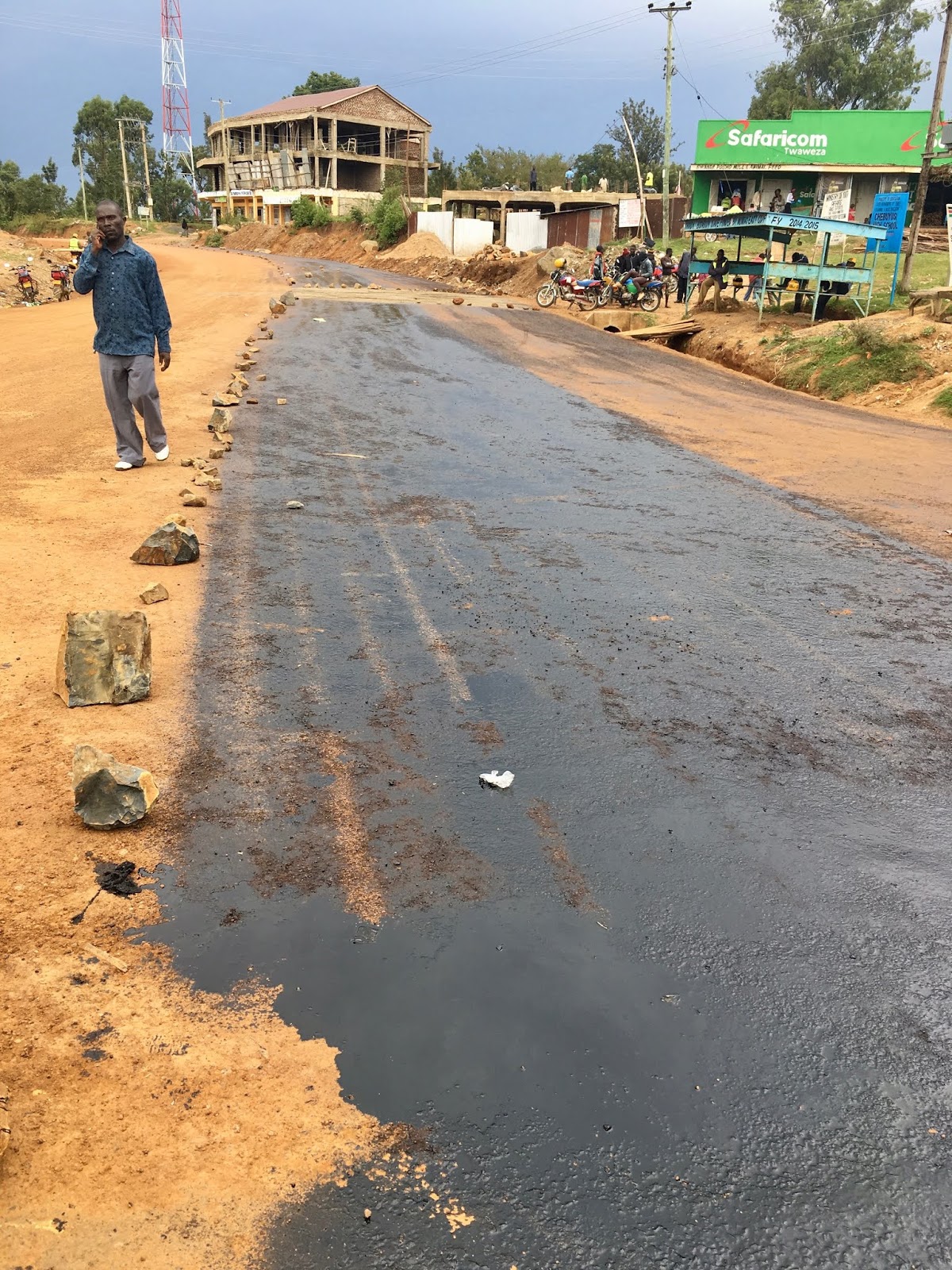
Building a new road in Shianda


It’s true that looking back to previous time now, some things have become more clear and easier to understand. A lot of the confusion with organising comes from the communication. Some days it may seem like “lost in translation” and other days you’re pleasantly surprised how organised a group is or how well someone remembers your agreement.
Communication can be a challenge and avoiding conflicts is very common here. Instead of explaining the situations people use excuses, which leads to cancellation of plans and no-one benefits from that. It is difficult because of a lack of education and a lack of resources, it is understandable. So, one of the challenges is to explain myself more clearly and to build trust being as transparent as possible. I don’t think anyone has ever said that capacity building is easy :) At the same time, there are people who are the most sincere and straight forward with their sayings, which I appreciate and which can also be very funny at times. From now on, one of my favourite words which apparently translates to many different meanings is "Sure".


Saw the snow in Shianda (hail)
After three months, community is used to you, even the local “matatu” (public transport) drivers know where you’re going. I tend to think it’s a good thing, at least here in Shianda. I have had no worries with security. Of course, there is still bribing (though, there are hints that it's changing slowly and government is taking action), stealing from one another (living in extreme poverty) and sadly violence. Considering all this, maybe the biggest danger for me is the road traffic, which is even worse during the nights or in the cities. However, this is the least of my worries now, my worry is that why does the time fly?


PS. I apologise for the blog design.

Saturday, April 6, 2019

The International Child Development Programme (ICDP) in Shianda (Part 2)


In my previous post I had promised to keep you updated on the rest four sensitization principles in my sessions with teachers. So, I keep my word and in this post I am revealing them to you.

The first principle goes in line with John Dewey’s approach “learning-by-doing” and it involves self-initiated practical activities. Caregivers were asked at the end of each session to carry out a series of exercises/home tasks in the form of reflections, observations, self-evaluations and testing out new ways of interacting with children. In that way they took their time to look into their caring practice carefully, becoming conscious of their actions and the consequences these have. Therefore, a positive change in their caring skills is more possible when it comes “from within” rather than by just trying to put the theory in practice.


The next principle has been one of my favorite and it’s about sharing thoughts and experiences in groups. I really enjoyed “stepping aside” and letting the participants speak out freely. My role was limited in guiding the discussion mostly by reflection provoking questions. It was super interesting to listen to teachers’ sincere realizations and see their “naked exposure” in front of their colleagues. 

I appreciated very much their honesty both when they reported back about home exercises and also during discussion of topics that popped up during the sessions. Many times I used examples from other teachers’ groups –obviously anonymously- to raise awareness. The purpose behind this was the special effect it had on them, as I could clearly see that they felt a kind of relief every time they heard that other participants have similar experiences as themselves.

I should also underline that their comments and insights were significant for me for two reasons. The first was the fact that I took them in consideration while I was preparing my next session with the specific group. So, according to what had been said, I tried to make the structure of my next session including their thoughts and “building upon them”. The second was that they helped me filling easily the logbook I wrote after each meeting. The logbook briefly is the facilitator’s “companion” and it contains information about each session’s flow based on observation and reflection.


But it was not only the caregivers who “shared their souls out”, but also me as teacher and as person. How would it be possible to encourage an empathic attitude towards children and talk about a living, human topic such as care if I kept “professional distance”? From the very beginning of the ICDP sessions I wanted to transmit to the teachers (indirectly with my behavior) that general explanations and cold, alien communication was not my style. Instead, I tried to replace that expected, usual pattern by a more equal relationship characterized by sharing of personal experiences.

More specifically, I used two communication methods while applying this third sensitization principle with the caregivers. The first was to give explanations through my personal examples, stories and demonstrations. Sharing my experiences with them through photos, videos, role-play, stories about my students, nephew in different settings etc. helped me to pass a concrete and strong message. It is worth mentioning that of course I used stories and images from other contexts and even though caregivers found them interesting, they were much more attracted by getting to know my personal repertoire of practical examples.

The second method was about indicating what the child experiences and how he/she feels in certain situations and reactivating teachers’ empathy by letting them think what they would experience in the same situation. Therefore, caregivers were encouraged to see the child as a person with feelings and intentions. In many contexts, this is something that people take for granted, but unfortunately this is not the case everywhere. So, reflection provoking questions like “how would you feel if…” and explanations such as “when you do this, the child feels…” constitute the interpretive ways of speaking trying to describe children’s experiences and emotions. 

The last sensitization principle includes the use of the eight ICDP themes for positive interactions as a basis for consciousness-raising, self-awareness and exemplification. It is recommended that the facilitator provides the caregivers with booklets where the eight themes are illustrated. However, due to lack of resources and number of participants, I decided to offer to the teachers an alternative option. 


In the last session I gave to each one of them and also left to each school a flipchart (which I created myself) in which the most important topics of our sessions were summarized. I suggested teachers to put it either in their class or at home, wherever they feel it will accompany them better reminding them our sessions. This is a way of both activation of personal exploration and self-monitoring.

In this ICDP circle there have been successfully certified 45 teachers from 4 primary schools in Mumias East area. The influence of the sessions in the interactions between caregivers-children seems to be really positive as it is seen through the anonymous feedback they filled during our last session. This feedback was my initiative and it contained three questions regarding to the sessions: their influence, possible difficulties and recommendations for change or/and improvement. It is surprising that no teacher mentioned other thing than positive impact on their interactions.

Some of their statements are the following: “My attitude towards caregiving has been totally changed, I feel more free and closer to children”, “I can now appreciate the importance of being empathetic and human”, “I can value the needs and emotions of the child”, “I’ ve been converted from a violent and non-sensitive person to a loving and understanding one”, “I changed my way of interacting with children from authoritarian to authoritative”,  “I’ve become a better teacher and a better person, my interactions both in school and in society have been improved”, “I am able to set limits on a positive way without the need of corporal punishment”.

I should also reveal that the main requests for change were: 1) increased number of sessions (6 with each teachers' group were not enough!), time extension and 2) implementation of the ICDP on a country level covering a broad spectrum of the society including parents, guardians etc. I wish I could do miracles! But as Theodore Roosevelt had said “Do what you can, with what you have, where you are!”


However, I didn’t want to leave anyone disappointed. I created an ICDP trained teachers WhatsApp group which includes the majority of them (and me!) so that they continue to share their insights, experiences and questions. I have also started a conversation through email with the rest with the same aim.

Last but not least, as my deployment soon comes to an end, I am planning to come in contact with the next education volunteer providing him/her with some questions in a form of a rating scale to distribute to the teachers. This can be used as an observation form and as a way of monitoring. 

I am happy and proud of this first ICDP experience coming successfully to an end. I feel grateful for everything I have experienced and learned through the sessions. It has been a way full of challenges and excitement at the same time. I am looking forward to my next ICDP adventure!

I leave you with this nice quote I saw somewhere recently: “Knowledge is like a garden; if it is not cultivated, it cannot be harvested” African proverb.

Love and light :)


Wednesday, April 3, 2019

62 days on the field.


Is nothing. Is something.

There are these thoughts constantly going back and forth “I still have time and I'm beginning to understand things now and keep on doing my work” and at the same time “I still haven’t done anything useful and I should understand more and there actually is no time”. This is when you remind yourself again that this is how it was going to be - you cannot do everything and understand everything and you must focus on the things you can do.

So, I’ll share what I’ve been doing. My main focus is working closely with our organisation WEFOCO community groups that are located in Mumias East, around Shianda. They gather at one specific place where they are used to meet (for example the chairlady's place or a local church) and then we have different topics for trainings that we are going to cover with them. I say we, because there are 3 other volunteers working with the same groups. My topic is nutrition and this month I did the basic introduction to nutrition. I talked about hygiene and nutrition values in different foods and importance of nutrients. Also very briefly mentioned the burning of the plastic and the effect it can have on our health and environment, because plastic is burnt with all the trash and the ashes of the plastic get to the soil in which they plant their vegetables and crops. There is no system for managing waste in Shianda or the areas around here yet.


I’m happy to see that a lot of the knowledge is there but the implementation is something to work on. In rural areas, most of them have land and are trying to grow vegetables and something to sell at the market or have at home. Im saying “trying”, because right now it's supposed to be the rainy season. Although, we are still waiting for the rains to start and just as we were discussing in the office the other day, people are getting more and more stressed about it and facing a lot of problems, which will have an impact on the life around here.


The implementation with groups will be cooking together and repeating the importance of having variety in food and letting the groups know that the healthiest food comes from their own land and not the market or supermarket. I have heard many stories how different countries spoil the market here with their imported foods that don’t have healthy nutrition value and are cheaper for the locals to buy.


I went to a school, where I talked about nutrition with students and I could see that they had been taught about it but the truth is that they still get to eat mainly one kind of food every day.


What I see is that there are a lot of health problems in this area which are curable with having the right diet and availability for better hygiene. Of course, better health starts with taking care of the hygiene but having no access to clean water is making it difficult. Wells are drying and there are lines of people with buckets to take water from the river, which will also dry out if it continues for much longer, but life doesn’t stop.

It is true that when you travel around Africa, you see and feel the “hakuna matata” vibe which I really appreciate but when you stay at one place for a longer time you start to notice how a person is struggling and working long hours just to make ends meet. There is a difference in time management and postponing happens a lot, even though I think there is always a reason and its hardly ever “just because”.  With my time I feel like I want to empower all the hard-working, struggling grown ups and children that I meet, which will be the topic for my next trainings to come.

And as our dear landlord likes to say: “ Otherwise, good night!” :)

Btw, while I was doing this post it started raining! So I guess the dance for it worked ;)

Sunday, March 17, 2019

Oh the warmth, oh the welcoming!

It was a bit over a month ago, when I arrived in the village called Shianda, in western Kenya. Kenya is a country where I’ve found it extremely easy to feel like home. Now, what makes a country feel like home though? Turns out that it  has nothing to do with the climate, comfortable bed you’ve gotten so used to, unappreciated luxuries like running water and stable electricity, or the home-cooked meals and available food in the super-markets. It is actually all about the warmth of the people, that you’re surrounded with, that makes you feel so welcome and comfortable - like home. And boy, oh boy, how much of it you come across here in Kenya. 

Statistics say that about 17.4 million of the poorest people in the world live in Kenya. And assessing based on the economy, living conditions and funding of education and health care, I do believe that number is correct indeed. However, these are the things that we consider as wealth, not necessarily what they do. The definition of wealth to them, is a whole different concept.

They embrace the little they have with such grateful hearts I’ve hardly ever seen before. They find something worth of a loud jabbering laughter even in the poorest of situations (which I sometimes find odd though). 
They have this calmness in them and smiles on their faces, even if they barely have funds for their kids’ school fees and have no idea how to pay for the next day's dinner. This real “hakuna matata” attitude. There’s been moments when it has freaked me out a little and made me want to ask them how can they be so careless, naive and irresponsible. But the truth is, they’re not. It’s far from that.

It’s not that they don’t understand the gravity of their situation (meaning economical), it’s just that they’ve accepted the fact that there’s not much they can do about it. They’ve learned to cope and trust in what they believe in. They believe that tomorrow will be a better day and they’re not stressing over all the ‘what if’s, which is so common for us, Europeans, to do. 
They really do master the art of embracing ‘the now’ and finding peace and happiness in what they currently have, not missing what they don’t or envying what the neighbours do. So, huge learning point for us Europeans.

Don’t get me wrong here though, it doesn’t mean that they don’t want to have it any better. Oh, they definitely do. They’re, for sure, trying to grasp every opportunity for improvement. They are longing to see the change for better. But they do it in a way that we don’t know how to. They do it with a peace of mind, yet hope of heart, without a glimpse of self-pity or constant complaining. With this calm and stress-free approach, which I would never be able to maintain, if I was their situation. 

It is, without a doubt, a beautiful, humbling experience to see and learn from their mindset, especially for me, since ‘impatience’ could easily be my middle name and worrying for no reason is not exactly rare either. I am very much looking forward to my next months in Shianda and hope to take on at least a tiny bit of the locals’ approach on life. 


So much for now. I will definitely write about the health care situation in rural Kenya, work conditions for nurses and my work here in my next post. 

If you'd like to read more about the living conditions and everyday life, as well as education and nutrition in our village, I highly recommend to read the blogs of my fellow-volunteers Hanna-Marta, Panagiota and Birgit (blog in Estonian). Links to their blogs can be found in the top right corner.


Friday, March 8, 2019


Greetings from Shianda and Happy Woman's Day (here we celebrated it on the 10th of February)!

Sunday, March 3, 2019

Harjumine Aafrikaga

Tere, tulevased/praegused/endised vabatahtlikud ja muud huvilised. Minu nimi on Birgit ja olen Mondo saadetud vabatahlik Shiandas, Keenias. Töötan järgmised viis kuud kohaliku organistatsiooni Wefoco juures. Minu ülesandeks on töötada koos kohalike gruppidega ja aidata neid ettevõtlustegevustes. Tulin kuu aega tagasi Aafrikasse kohvritäie ravimite ja rohkete eelarvamustega. Ravimid on siiani alles õnneks, aga eelarvamused on enamasti ümberlükatud.

Elamistingimused

Jagan kolmetoalist korterit teise vabatahtliku, hispaanlanna Martaga. Jagame Martaga peale korteri ka paljusid iseloomujooni ja kiindumust hea toidu vastu. Meie köök on alati Shianda turult ostetud värsket kraami täis. Majal on aed ja veranda, kus joon hommikukohvi koos ringi siblivate kanade ja ennasttäis kukega. Naudin väga siinseid hommikuid; ärkan enne teisi, aga veidi hiljem kui too kukk, ehk umbes seitsme paiku. Korter on väga kodune ja selliste rahulike hommikutega on väga tore alati päevale vastu minna.

Shianda küla ja kogukond

Oleme vabatahtlikega ainsad muzungud külas ja tähelepanu on meeletu. Saan aru, miks Hollywoodi staarid ütlevad, et kuulsus on väsitav. Inimesed tervitavad, näitavad näpuga ja küsivad kuidas läheb umbes viis korda minutis. Aga sellega harjub ja selle vastu aitab enese väljalülitamine. Selle on kõik vabatahlikud ära õppinud. Paar korda on juhtunud, et näen teist vabatahtlikku üle tee kuskil eemal ja hüüan teda mitu korda, aga ta reaalselt ei reageeri. Välja lülitatud. Kogukond kellega töötame on väga külalislahked. Algul veidi kartsin, et nad pole ehk huvitatud mingitest koolitustest, mida me siin üritame neile anda. Aga need, kes kohal käivad on väga tänulikud. Minu jaoks on kõige liigutavam vaatepilt see, kui vanad mehed ja naised, pliiatsid näpus, hoolega kuuldut kirja panevad. Iseasi see kui palju õpitust ka kinnistub, aga selle jaoks ongi monitoorimine.

Eelmine kogukonna vabatahlik Linda korraldas kohaliku põllumajanduseksperdi Salimiga kanapidamise ja orgaanilise põllumajanduse koolitusi. Küsisime siis peale tema tsükli lõppu, mida iga grupp on õppinud ja kasutusele võtnud. Selgus, et enamusel olid meeles mida nad õppinud olid, kuna oskasid nö. tunnikontrollile õigesti vastata. Samas väga paljud ei implementeeri õpitut, kuigi teadmised on olemas. Seega üritan oma aja jooksul teha neile projektijuhtimise koolitusi, kus proovin neile natuke sisendada sellist suhtumist, et no excuses, only results. Ehk kuidas asju planeerida ja meeskonnana neid asju ellu viia. Vaatab kuidas läheb.

Töö ja vaba aeg

Gruppe, kellega töötame on kokku 16. Seega kui koolituste tsükkel käib on päevad tihedad. Tööpäev algab boda seljas grupile külla sõites. Boda sõidud on üks mu lemmikosa päevast ausalt öeldes. Oleneb paljuski bodajuhist, aga hea juhiga mööda käänulisi külateid sõita on mõnus. Kui grupi juurde jõuame siis meid tervitatakse hoogsasti. Siis algab ootamine. Ootamist tuleb Aafrikas palju ette. Oleneb päevast ja grupist, aga kella peale ei alusta me kunagi. Kui oleme kokku leppinud, et koolitus algab kell kümme, siis enne kella 11 on naiivne arvata, et midagi juhtuma hakkab. Sellega harjub. Kui koolitus on pikem, siis on ka lõunasöök grupiga koos. Ugali, kana, kartul, lehtkapsas on tavaliselt menüüs. 
Kui me gruppe ei külasta, siis teeme kodus või Wefoco kontoris tööd. Nendel päevadel sööme küla kohvikutes või kodus. Käime ka kaks korda nädalas kõrval külas trennis, et chapati ja töömõtted välja higistada. Nädalavahetusteti sõidame külast eemale, seda on vaja. Keenia on väga ilus ja avastamist on palju!